
Insights · Personal reflection
Personal leadership in nature: what will you take back to work?
Who are you in a group when the surroundings are unfamiliar and the answer is not immediately clear? Beyond your everyday routine, you can explore how you take initiative, ask for help and make room for others. What do you recognise in your role as an entrepreneur or leader?
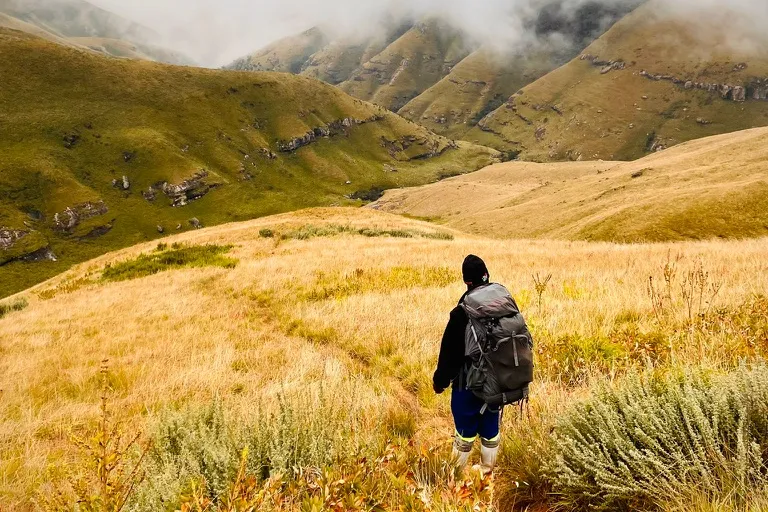
You have built up experience at work. You know the people and the agreements, and have found ways to get things done. Perhaps you are the one who makes decisions, solves problems or makes sure nobody is overlooked. Which of those habits do you choose consciously, and which do you use automatically?
Personal leadership in nature starts here with attention to your own actions. You do something together, reflect on your contribution and deliberately try a different approach next time. For entrepreneurs and leaders, the question is: what would you like to take back to the people and decisions you are responsible for at home?
What do we mean by personal leadership?
In this article, personal leadership means consciously directing your own behaviour: recognising what you do, taking responsibility for your contribution and deciding what to keep or adjust. It begins with a specific moment. You might ask a question, take over a task or leave a decision to someone else.
As an entrepreneur, you can explore when your involvement helps and when you take on work someone else could handle. As a leader, you can look at how you express expectations and how much room you then give others. Your own need for explanation, help or rest is part of that exploration too.
A useful starting question is: which aspect of my own behaviour would I like to understand better? Choose something you can point to in a situation. “I want to notice when I offer a solution before asking the other person enough questions” gives you a clear moment to watch for.
Explore your habits beyond your routine
Outdoors, practical things need attention: carrying your equipment, finding a direction together, looking after camp and preparing a meal. You contribute to something the group needs at that moment. You can notice how you make agreements, respond to another suggestion and say what you do not yet know.
Imagine preparing a meal with a group at camp. Without discussion, you start assigning tasks because you want everyone to eat on time. Someone else has already suggested a division of work. Do you notice? Do you ask what has been agreed? Or continue with your plan? This is an imagined example of an everyday moment outdoors.
The question lies in your choice. What did you want to achieve, what did you do and how did it come across to others? You can later ask the same questions about a project meeting in which you quickly take charge. First explore whether you actually recognise that connection.
Nature provides the setting for a shared experience here. The attention to your behaviour comes from what you do, the feedback you ask for and what you try again afterwards.
Practise leading, following and asking for help
When roles change, you have a chance to explore different contributions. What do you do when you need to provide direction? And how do you contribute when someone else takes the lead?
- When leading: do you make clear what is needed and ask what knowledge others bring?
- When following: do you give the other person room to make decisions and raise anything unclear in good time?
- When asking for help: can you explain what you have already tried and where you need support?
- When looking after yourself: do you say when you need rest, food or an explanation, so the group can take it into account?
Choose one of these questions to focus on. If you want to practise following, for instance, you can look back at the moment you heard a different suggestion. What did you do, and what did that make possible for the other person?
Turn an experience into a useful question
Choose one event for your reflection. First describe what you said or did before judging it. In the meal example: “I started dividing the tasks without asking what had already been agreed.” This gives you something specific to discuss.
Ask someone else what they saw. You can compare your intention with their experience: you wanted to make things clear, while they may have had to explain an existing agreement again. Ask about that difference and choose what you would like to try next time you work together.
- What did I intend to do, and what did I actually do?
- What did the other person notice about my contribution?
- Where do I recognise this in my everyday work, and where is the situation different?
- What small change would I like to explore next time?
In the intended approach to the adventure in Sweden, you reflect with the group and one to one with an expedition guide. You can then put your insights into practice again. A question for reflection becomes a next step in what you do.
Take one intention back to work
Before returning to your daily routine, choose a familiar work situation. It could be the weekly team meeting or a conversation in which a colleague brings you a problem. Decide what behaviour you would like to try there.
“In the next team meeting, I’ll first ask which approach the others suggest. Then I’ll explain which decision is mine and what they can decide for themselves.”
One possible intention for practising giving others room and taking responsibility.
After that meeting, ask a colleague what was clear and what was still missing. Note what you tried and what you want to adjust. This lets you return to a specific experience even when the usual work pressures are back.
Would you like to explore making decisions when time and information are limited? Read leading under pressure: how do you keep perspective?